
IPBES Business and Biodiversity Assessment: A scientific reality check for the global economy
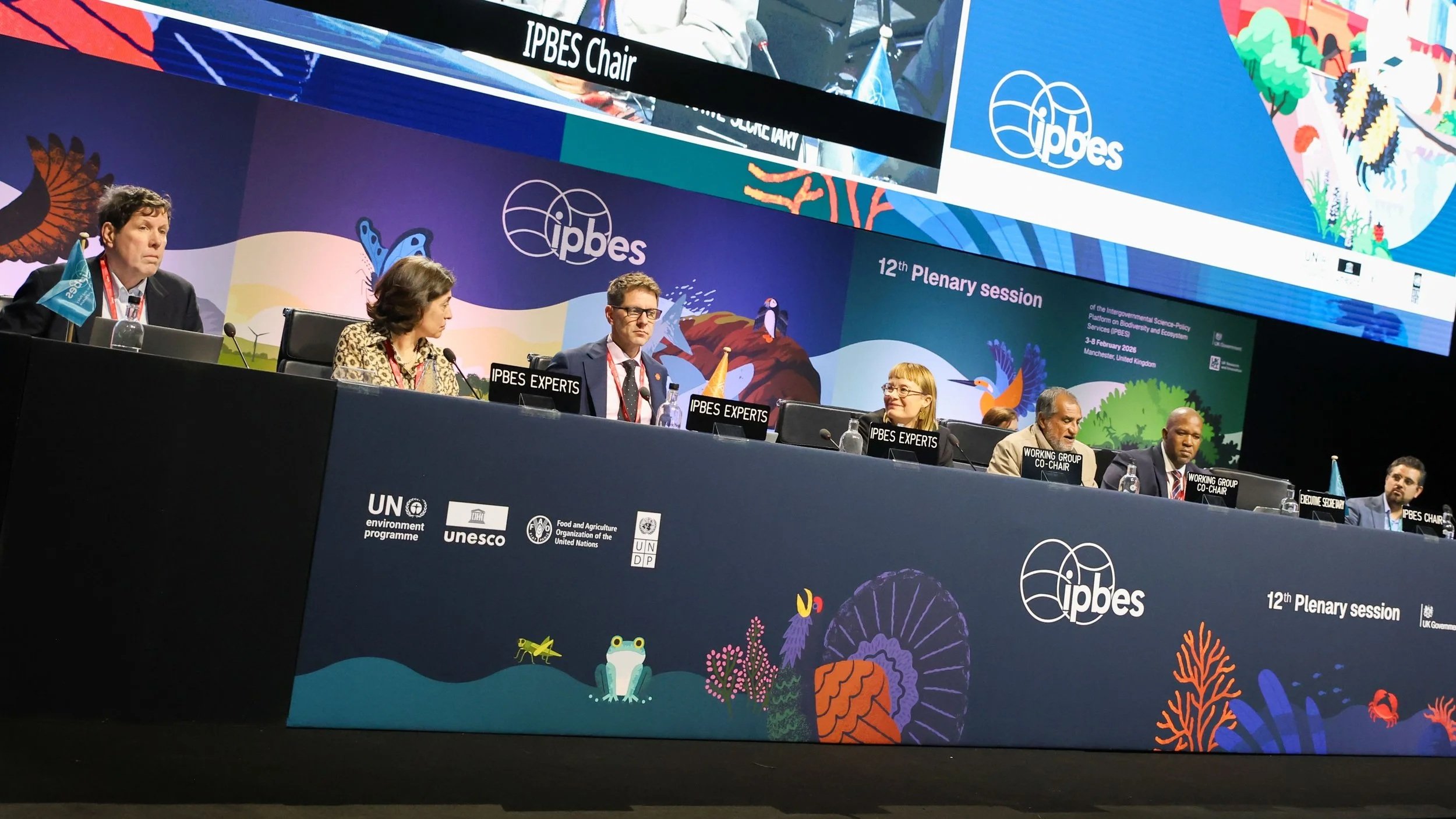
The relationship between economic resilience and the natural world is at a crossroads. The Intergovernmental Science-Policy Platform on Biodiversity and Ecosystem Services (IPBES) has released its "Methodological Assessment of the Impact and Dependence of Business on Biodiversity."
The report serves as a reality check, providing a scientific foundation for how businesses must navigate their relationship with the natural world. The launch comes at a critical time for the Kunming-Montreal Global Biodiversity Framework (GBF), specifically Target 15, which commits governments to require businesses to assess and disclose their risks and impacts on biodiversity and reduce their negative impacts on nature.
While business leadership is essential, the assessment is clear that voluntary action alone will not deliver the pace and scale of change needed. Without government policies that put in place the right incentives and create a level playing field, even the most committed companies will struggle to drive transformative change.
The assessment makes it clear that:
Biodiversity loss is no longer just an environmental concern; it is a critical systemic risk threatening financial stability, the global economy and ultimately human well-being.
All businesses depend on nature, yet many lack the information needed to measure these invisible ties throughout their value chains.
While businesses have driven global economic growth, this has often come at the expense of the ecosystems that sustain us with 14 out of 18 categories of nature’s contributions to people currently in decline
The pressure for short-term profit often conflicts with ecological timescales, making long-term changes difficult under current conditions.
The assessment shows how government policies and financial systems can be shaped so that business success goes hand in hand with protecting and restoring nature. Moving beyond voluntary disclosure is essential to ensure transparency and to prevent greenwashing. And crucially, the report identifies Indigenous Peoples and local communities as the primary stewards of our ecosystems, urging businesses to meaningfully integrate their traditional knowledge into their core strategies.
A further significant finding is that the current conditions in which businesses operate are not compatible with a sustainable future. According to the report, USD 1.3 to USD 3.1 trillion is provided annually in public subsidies to activities driving nature's decline, roughly ten times what is spent on conservation and restoration. This reinforces the report’s call for governments to align incentives and policies with nature-positive outcomes.
“The IPBES assessment is a scientific reality check that biodiversity loss is now a systemic risk: biodiversity loss is now a system risk to the global economy and business itself. We have the frameworks. We have the solutions. There is no excuse for inaction. We welcome this report as an urgent wake-up call. Businesses, the financial sector and governments already have enough information to turn their intention into impact. Let’s put in place the systems and incentives to make it happen, fast.”
To bridge the implementation gaps identified by IPBES, businesses need not let perfect be the enemy of the good.
There are already well recognized and credible frameworks out there to help businesses including;
Natural Capital Assessment and Accounting methodologies are well established and among the most used by businesses.
Science Based Targets for Nature (SBTN) provides a clear five-step process to set rigorous, science-based targets for land, water, and biodiversity.
The Taskforce on Nature-related Financial Disclosures (TNFD) offers a standardized disclosure framework to help businesses communicate nature-related risks and opportunities to investors.
And these frameworks are further improved and aligned. The science base is still being strengthened, and knowledge gaps are slowly being addressed, but most solutions are already robust enough to guide immediate corporate action to address nature loss.
Companies can already take action:
1. Take priority actions for your sector: Access guidance for 15 specific sectors, developed with WBCSD and the World Economic Forum, to credibly help halt and reverse nature loss. Identify the most relevant metrics to track and report progress in alignment with key global frameworks
2. Develop and publish a credible strategy on nature: Join the ‘It’s Now for Nature’ campaign by submitting a strategy that scales and speeds up your corporate action.
3. Advocate for ambitious policies that governments can implement to generate faster and more efficient business action at scale to deliver the goals and targets of the Global Biodiversity Framework.
The science is clear. The tools are on the table. Nature cannot wait and neither can business.